

Don't get caught short! call
02477 350679
What Are the Construction Site Toilet Requirements in the UK?
Providing suitable welfare facilities on a construction site is a legal requirement under UK health and safety regulations. Whether you’re managing a small residential build or a large commercial development, workers must have access to adequate toilet and washing facilities from the start of the project.
Failure to provide suitable welfare facilities can lead to health and safety issues, reduced productivity and potential enforcement action.
This guide explains:
- UK construction site toilet requirements
- CDM welfare facility obligations
- How many toilets are needed on a building site
- Portable toilet and welfare unit options
- Cleaning and servicing requirements
- Best practice for site welfare planning
Construction Site Toilet Requirements at a Glance
Requirement | Typical UK Guidance |
Toilets | Commonly 1 toilet per 7 workers |
Hand Washing Facilities | Required alongside toilet facilities |
Drinking Water | Must be available to workers |
Rest Facilities | Required under CDM Regulations |
Cleaning & Servicing | Toilets must be maintained and kept hygienic |
Responsibility | Usually the Principal Contractor |
Portable Toilets | Commonly used where permanent facilities are unavailable |
Welfare Units | Often used on medium and long-term projects |
Why Are Toilets Required on Construction Sites?
Construction sites must provide adequate welfare facilities to protect the health, safety and wellbeing of workers.
Under the Construction (Design and Management) Regulations 2015 (CDM), welfare facilities must be available from the beginning of a project and maintained throughout the duration of the work.
The responsibility typically falls to the principal contractor, although welfare arrangements should be considered during project planning.
Providing suitable toilet facilities helps:
- Maintain hygiene standards
- Reduce unnecessary travel away from site
- Improve workforce welfare
- Support legal compliance
- Prevent environmental contamination
Regardless of project size, workers should never be expected to leave the site to find toilet facilities elsewhere. Learn more about our portable toilet hire for construction projects.
What Welfare Facilities Are Required Under CDM Regulations?
CDM welfare facilities extend beyond toilets alone.
Construction sites are generally expected to provide:
Toilet Facilities
Workers must have access to suitable and sufficient toilets throughout the project.
Washing Facilities
Hand-washing facilities should be located close to toilets and provide clean water, soap and drying facilities.
Drinking Water
An adequate supply of wholesome drinking water must be available to all workers.
Rest Facilities
Workers should have access to a suitable rest area where they can take breaks and eat meals.
Changing Facilities
Where workers need to wear specialist clothing or protective equipment, suitable changing facilities may also be required.
Together, these facilities form the welfare standards expected on modern construction sites.
How Many Toilets Are Required on a Building Site?
For portable chemical toilets serviced weekly, a commonly used guideline based on UK sanitation standards is one toilet for every seven workers.
Typical Construction Site Toilet Ratios
Number of Workers | Minimum Toilets Required |
1-7 | 1 |
8-14 | 2 |
15-21 | 3 |
22-28 | 4 |
29-35 | 5 |
These figures should be treated as guidance rather than a strict legal formula.
Additional facilities may be required where:
- Multiple shifts operate
- Sites receive regular visitors
- Projects run for extended periods
- Male and female facilities need to be provided separately
- Welfare units are used instead of standalone toilets
When planning site welfare, it is generally better to provide slightly more capacity than the minimum required.
Types of Toilets Used on Construction Sites
The most suitable solution depends on site size, duration and available services.
Portable Chemical Toilets
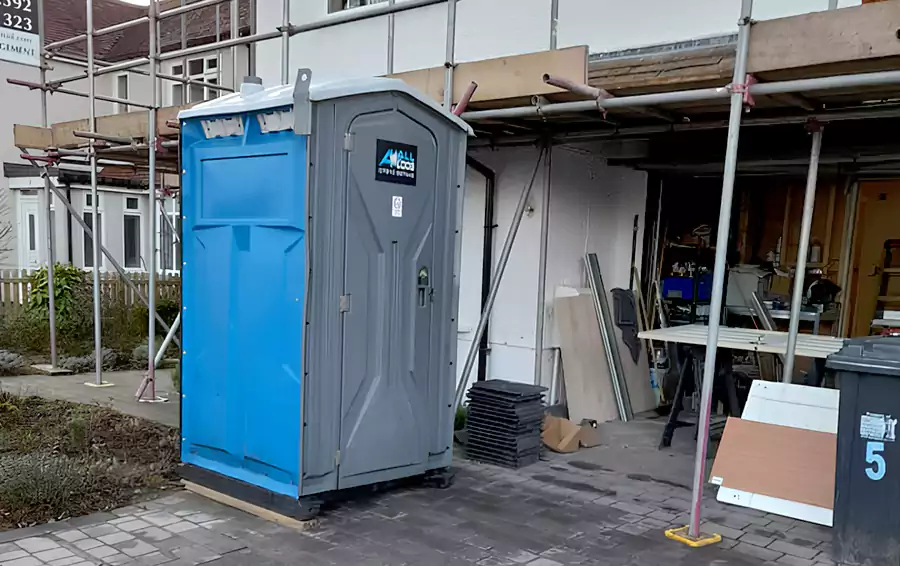
Portable toilets are commonly used on construction sites where mains drainage is unavailable.
They provide a practical and cost-effective solution for:
- House building projects
- Extensions and renovations
- Groundworks
- Temporary construction sites
Most units include:
- Toilet
- Waste holding tank
- Ventilation
- Hand sanitising facilities
Regular servicing is essential to maintain hygiene standards.
Mains-Connected Toilets
Where permanent water and drainage connections are available, flushing toilets connected to mains services are generally preferred.
These facilities are often used on established sites or later phases of construction projects.
Construction Welfare Units
Welfare units provide a higher level of site welfare and are commonly used on medium and long-term projects.
A welfare unit may include:
- Flushing toilet
- Hot water hand washing facilities
- Seating and rest area
- Drinking water
- Heating and lighting
Many contractors choose welfare units because they combine several CDM welfare requirements into a single solution.
What Washing Facilities Must Be Provided?
Providing toilets alone is not sufficient.
Construction workers frequently handle materials such as:
- Cement
- Oils
- Fuels
- Adhesives
- Chemicals
Suitable washing facilities help reduce health risks and maintain hygiene standards.
Wash stations should include:
- Clean running water
- Hot or warm water where possible
- Soap or cleaning solution
- Paper towels or hand-drying equipment
- Adequate lighting
Hand sanitiser can be useful but should not replace proper washing facilities.
How Often Should Construction Site Toilets Be Cleaned and Serviced?
Construction site toilets must remain clean, functional and hygienic throughout the project.
Portable toilets are typically serviced weekly, which may include:
- Waste removal
- Tank emptying
- Deep cleaning
- Replenishment of consumables
- Inspection for damage
Sites with high usage levels may require more frequent servicing.
If facilities become unhygienic or unusable, they may no longer meet welfare requirements.
Where Should Portable Toilets Be Located on a Construction Site?
Toilets should be positioned so workers can access them easily and safely.
When deciding where to place portable toilets, consider:
- Distance from active work areas
- Safe pedestrian access routes
- Ground stability
- Vehicle access for servicing
- Future site development phases
On larger sites, multiple toilet locations may be needed to reduce walking distances and improve accessibility.
Planning toilet locations early can help avoid disruption later in the project.
Portable Toilets or Welfare Units: Which Is Right for Your Site?
The best option depends on project requirements.
Project Type | Recommended Solution |
Small domestic build | Portable toilet |
House Extension | Portable toilet |
Small commercial project | Portable toilets |
Long-term construction project | Welfare unit |
Infrastructure project | Welfare unit plus portable toilets |
Multi-contractor site | Welfare unit with additional toilets |
Portable toilets offer flexibility and cost efficiency, while welfare units provide a more comprehensive welfare solution for larger projects.
Choosing the Right Construction Site Toilet Setup
When planning welfare facilities, consider:
Workforce Size
More workers typically require additional toilets and servicing.
Project Duration
Longer projects often benefit from welfare units that provide enhanced facilities.
Site Access
Delivery and servicing vehicles require suitable access throughout the hire period.
Servicing Requirements
Busy sites may require more frequent cleaning and waste removal.
An experienced supplier can help determine the most appropriate solution based on your site conditions and workforce size.
Construction Site Toilet Hire Across the Midlands
For many construction projects, portable toilet hire provides the quickest and most practical way to meet welfare requirements.
Units can be delivered directly to site, positioned where needed and serviced regularly throughout the project.
A Star All Solutions supplies construction site toilet hire across Nuneaton, Coventry, Leicester, Birmingham, Rugby and the wider Midlands, helping builders, contractors and developers maintain compliant welfare facilities from day one.
Frequently Asked Questions
Final Thoughts
Providing adequate welfare facilities is an essential part of running a safe, productive and compliant construction site.
By understanding construction site toilet requirements, CDM welfare obligations and appropriate servicing arrangements, contractors can create a better working environment while meeting their legal responsibilities.
Planning welfare facilities before work begins helps ensure that workers have access to the toilets, washing facilities and rest areas they need from the first day on site.